Wednesday, September 25, 2013
David Marr's Quarterly Essay on George Pell
This QE is Marr's fourth, and it is easily his best. Which surprises me, Marr not being a Catholic or believer, etc. But that's probably why he's been able to assess Pell clearly and objectively, just based on the extensive research he's obviously done.
He focuses on Pell's handling of the sexual abuse crisis in the church over decades, and very effectively brings all the threads together to produce a damning indictment. Believe me, this QE will make you angry!
Beautifully written and well worth reading.
Monday, September 23, 2013
Eleanor Catton's The Luminaries
Right from the start you know this is going to be a good read. A faux 19th century big baggy monster set in an exotic location. It reminded me very much of the awesome David Mitchell of Cloud Atlas and Jacob de Zoet fame.
How can a 27 year old produce such a mature, luscious, intriguing story, rich in social detail and human insight.
It's long though, because of the constant repetition involved with so many characters going through the same discovery process around the same set of incidents. This means regular recounting of the story to remind the reader what's taken place previously. It's really not that complicated a plot, centered around a gold heist, but flesh is added to the bones progressively, and by the end it's become a rich and satisfying feast indeed.
Most of the 12 luminaries also suffer from extreme verbosity, and there are plenty of back stories. So we're faced with a novel of 832 pages, and one that demands close reading and concentration. As well, Catton has a habit of subjecting all her characters to lengthy psychological assessments. Here I think she's trying a bit too hard.
It becomes somewhat claustrophobic and burdened by detail but nevertheless it does deftly convey in microcosm the moral, social, economic and political pressure points of a small but thriving mid-19th century community. The luminaries, eminent citizens, are a fascinating, representative mix - one even a whoremonger, another an opium dealer.
I enjoyed this absorbing novel immensely. It's quite magnificent. Of all the novels shortlisted this deserves to win the Booker. If the judges give the prize to sentimental favorite Jim Crace's rather lightweight Harvest, then the Booker deserves to be swamped by Americans in the future.
Sunday, September 15, 2013
Jim Crace's new novel is the Booker favorite apparently. It's set in an English peasant farming community in pre-modern, pre-literate times.
The problem I have with the book is that these themes are not new. There's nothing original here. The writing is strong, muscular and poetic, particularly in its descriptions of nature in all its moods, but there is little reach into deeper, more resonant meanings. There are no surprises, no dramatic shifts, nothing to break the calm, measured progress of the narrative. It's a book that will not stay with you.
I find that disappointing, particularly in a year when JM Coetzee's extraordinary The Childhood of Jesus did not even make the long list. That remains a travesty.
Sunday, September 1, 2013
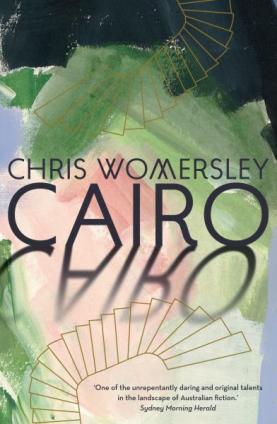
At first I thought Cairo was going to be a pretty standard 'Sophisticated Europe/Provincial Australia' narrative. Louche arty types, whiskied up, railing against their boring, backward country. It's a familiar trope. Germaine Greer stuff - you may have heard of her.
But it's not that at all. It's a pretty standard action drama built around a true crime that took place in Melbourne in 1986 - the heist of Picasso's Weeping Woman from the National Gallery of Victoria.
Womersley has created out of this an absorbing popular tale. It's written with enormous charm and style, without pretension, and peopled with lively characters.
The problem is it falls well short of its literary and imaginative promise. Inspired by an actual event it remains anchored to it, and never has the chance to take off as a more probing, socially critical literary effort.
And it desperately needed a final 'Thirty Years Later' chapter.
Womersley's previous multi-award winning novel Bereft was far more accomplished. But read Cairo nevertheless. It's hugely enjoyable.
Sunday, August 25, 2013
An Empty, Meandering Failure of a Prize Winner
It's an empty, meandering failure. I was profoundly irritated by the clotted prose, the passive voice and the constant sloppy use of the wrong word just because it sounded edgy or novel.
It tells the separate stories of two main characters Laura and Ravi. They left me cold, as did the hundreds of other minor characters introduced every second page. The whole thing is a mess. It's a very labored 500 page trawl through these characters' travels and travails. Whatever plot there is lurches forward with grinding tedium. Sure, Australia is sunny, suburban, peaceful, multicultural, but with sad and violent personal histories threaded into its immigrant tapestry. But no larger exploration of meaning is being attempted, at least as far as I could tell.
De Kretser writes like a painter paints - constant dabs of 'there was', 'there were' - adding some descriptive color but not propelling the narrative. Pages and pages are clogged with this sort of impressionistic stuff. Touristy bric-a-brac - a bit of this, a bit of that, all mashed together.
And the ending is entirely predictable - it's Sri Lanka in December 2004. Have a guess!
Thursday, April 4, 2013
Catholics and Gay Marriage
Two things firstly:
1. I deeply respect the Judeo-Christian tradition, particularly in its Catholic expression. I spent six and a half years in a Catholic seminary including four years in Rome, so I know something about it.
2. I am in favor of gay marriage.
Although the Catholic church will never grant gay marriage equality, it should grant it recognition.
Gay marriage is an issue for the secular state. The church doesn't own the term 'marriage', much less the legal architecture surrounding it.
The official Catholic position is that the sacrament of marriage, in its 'fullness', can by definition only be between a man and a woman, as only such a union is fundamentally 'open' to the pro-creation and nurturing of children. (Concepts such as fullness and openness have a long history in Catholic thought.)
But Catholics can believe in the primacy of heterosexual marriage without resorting to a mindless denigration of gay marriage. In fact surveys show that a majority of Catholics are of that persuasion.
Catholic thinking on homosexuality, like contraception, is still very immature. Orthodox moral theology demonises the 'sin' as ontologically evil, but forgives the 'sinner'. This means the church has a long way to go before it will even come close to embracing gay unions, much less celebrating them liturgically.
There is no conceptual conflict on other issues of faith and morals like divorce and abortion which the state allows in specific circumstances and Catholic belief doesn't.
Christendom is long gone. We live in a secular, pluralistic, tolerant, multi-faith society, ironically a gift of the Judeo-Christian tradition. It is no longer realistic for Christians to expect, much less demand, that society honour without qualification their particular belief and value system.
Believing in religious freedom also means believing in the legislative freedom of the secular state. The church can organise, protest, lobby and persuade, but it cannot de-legitimise.
Perhaps one day, after an adult church abolishes celibacy and ordains women and the openly gay, it will find itself ready to celebrate and embrace gay unions, thus honouring the deep love and public commitment of the participants.
I'm not one of those who believe this will never happen. The Holy Spirit resides in the people, and the people will eventually have their way.
Saturday, March 30, 2013
Ruth Ozeki's A Tale for the Time Being.
This is a highly imaginative story of a young teenager, Nao, caught between the two worlds of Japan and California, as she struggles to find meaning in her unhappy life. Her discovery of her 104 year old great-grandmother, a zen monk; her fraught relationship with her depressed, suicidal, father; and, most particularly, her shocking experience of extreme bullying at school - are all described in vivid detail in her diary that seems to have floated across the sea after the tsunami of 2011 to Canada on the other side of the Pacific ocean.
It is found by Ruth, the author, whose reading of it, and some heartrending letters contained in the same package from the monk's WWII soldier son, affects her profoundly.
Did Nao and her father die in the tsunami? This in unanswered, which is disappointing, especially as Ruth finds out independently that Nao graduated from her Tokyo high school and attended Montreal University. Why didn't Ruth follow that up? Perhaps she's still there.
Instead she retreats into recounting a rather fantastical dream, where she meets the father and helps him chose 'life' rather than death. Is it a dream, we are asked to believe, or a parallel world of 'reality'?
So in the end we get frankly ridiculous. It descends into 'Deus ex Machina' territory by inviting us to believe her husband's suggestion that quantum mechanics, with its abstruse theories of 'multiple realities', offers the answer! A real emotional let down.
This is emblematic of the one big structural flaw that lets the novel down in the end - the intrusion of the real life of the author, her husband and her Canadian township into the fictional narrative. This limits Ozeki's imagination as a novelist and reduces the book's power immeasurably. A real pity.
Subscribe to:
Posts (Atom)